The perennial problem of estimating the cost of a larger project has been with me since around 2005. Once I joined the ranks on self-employment back in 2007, it became even more important to eliminate the guesswork and come to some methodical approach of estimating work to be done.
Simultaneously, as we provide a simple budgeting tool for our clients in the ProudNumbers management accounts, there are many common traits between budgeting for business and estimating costs of the software project.
Speaking about estimation methods, our natural reaction to the question "How long will it take?" is to give an answer, which usually matches our experience with a given problem.
The duration of the past implementation of a similar solution, and some kind of reasonable reserve form the final figure. The answer always depends who is posing this question.
Similarly, the business owner will relate to his previous year's trading results, in order to estimate a new financial plan and forecasted revenues.
While the single point estimate is most frequent, it is a point where we need to start, but more needs to be done.
Especially nowadays, the uncertainty of the future economic situation is very high. The business owners need to reflect this, doing their best case scenario planning, the worst case scenario analysis, and the most likely case.
The probability of which scenario is going to happen, and how to calculate it is a subject for PhD thesis work. I think the probabilities depend on the estimator and his experience from similar situations.
As always, doing, according to known practices, will help, and capturing the likelihood of the scenarios needs to be done.
In software engineering the well-known author Steve McConnell talked about 2-point estimate—minimum, and maximum time needed.
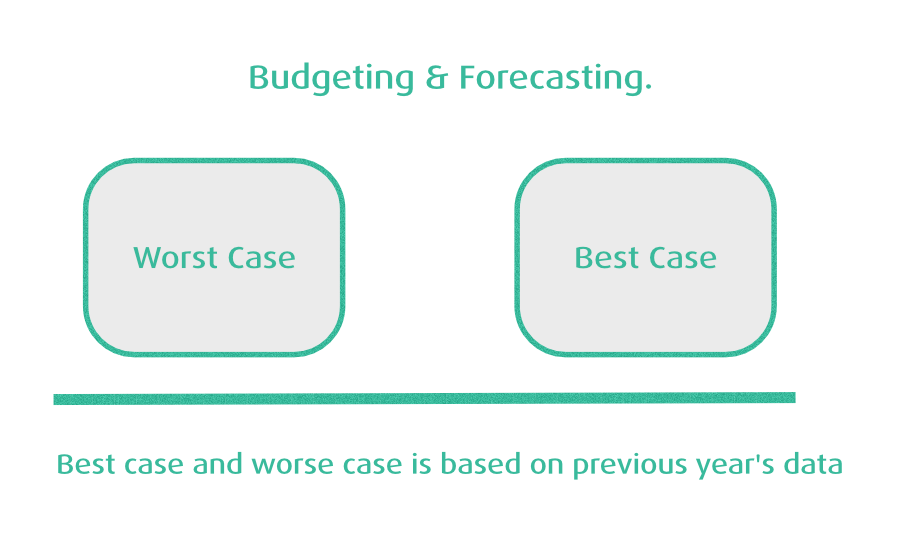
Our experience tells me that the maximum time is usually connected with the problem of guaranteeing the delivery at all, which for very risky projects can be an issue.
The usual problem is that certain costly projects could be economically unviable, so it is all about the most likely project outcome, with the budget which guarantees a successful outcome for the client.
The notion of the 3-scenario project estimation is the same as the 3-scenario budget planning.
If we leave the notions of standard deviations, advanced statistics, and we use common sense and take our accountant's advice, we can conclude:
The forecast is as accurate as possible in the given moment - when it was made. So we can estimate the best we can, however, once the real figures start to come in, we need to assess our budget, of course extend it into the future for the month just passed.
Furthermore, we will reassess what has changed.
The final takeaway point from this post is perhaps always thinking about a future budget as the best, and worst case budget scenarios.